gme-movie.com
RSS

Tourmaline – Stones of Healing

May 2020 – Stones of Healing

Mookaite – Stones of Healing

Pyrite – Stones of Healing

Malachite – Stones of Healing

Serpentine – Stones of Healing

Charoite – Stones of Healing

Chrysoberyl – Stones of Healing

September 17, 2025 By maximios in Stones

Chrysoberyl is a beryllium aluminium oxide mineral that belongs to the oxide and hydroxide class of minerals. appears as trilling or twinned hexagonal crystals. Despite the similarity of their names, chrysoberyl and beryl are two completely different gemstones.

​The three main varieties of chrysoberyl are:

  • Chrysoberyl  is a yellow-to-green transparent to translucent crystal.
  • Alexandrite is one of the rare color change crystals and is translucent
  • Cymophane (cat’s eye)  is fibrous and translucent. This is the only stone that can just be called cats eye, all other cats eye crystals must have the name of the crystal included such as cat’s eye tourmaline or cat’s eye quartz or even cat’s eye selenite.

​​Yellow-green chrysoberyl was referred to as “chrysolite” during the Victorian and Edwardian eras, which caused confusion since that name has also been used for the mineral olivine/peridot, that name is no longer used.

Chrysoberyl helps to highlight the cause of dis-ease. It supports self-healing. Chrysoberyl balances adrenaline and cholesterol, and fortifies the chest and liver.

When chrysoberyl is used with other crystals it will highlight the cause of a disease. This stone supports self healing, balances the adrenal glands and balances the cholesterol levels in the body. Chrysoberyl enhances the healing of chest and liver complaints. This stone is helpful in reducing the physical side effects of being paralyzed. Working well with the digestive system, chrysoberyl will settle stomach problems, heal the liver, reduce skin problems and allergies relating to this system.

Onyx – Stones of Healing

September 17, 2025 By maximios in Stones

Onyx is a black and white banded variety of Chalcedony, a cryptocrystalline form of Quartz with dense, fibrous layers and a hardness of 7. It is also defined as a black and white banded Agate, also a variety of Chalcedony. They differ only in that Onyx’s alternating layers are parallel to one another while Agate’s layers are curved and more chaotic.

While many think of Onyx as a solid black stone, the term refers to the Chalcedony banded black and white. A variant form in which white layers of Onyx alternate with Sard (a reddish-brown Chalcedony) is called Sardonyx. Both have been known and utilized for over 4,000 years for hardstone carving, stone inlay, and jewelry, treasured most for their use in intaglio seals and cameo engraved gems where the white bands are carved away to make the image contrast with the dark background. In some specimens black Onyx may be layered with Sard, and in many cases material may be a combination of all three. [www.mindat.org][en.wikipedia.org][Fernie, 314][www.gemselect.com]

References to Onyx and other closely related stones are found in many ancient cultures and their texts, including the Bible, at times with conflicting definitions and an overlap in terminology.

Onyx gives strength. It promotes vigor, steadfastness and stamina. Imparts self-confidence, helping you to be at ease in your surroundings. Onyx treats disorders of the bones, bone marrow and blood. It is beneficial for teeth and the feet.

Onyx and Sardonyx are reputed to improve function of the nerves and enhance the sensory organs, especially those associated with the ear. They are believed to sharpen hearing, assist in problems or diseases of the inner ear, and aid in treatments for tinnitus. [Megemont, 138][Gienger, 63, 77][Hall En, 204]

Both Onyx and Sardonyx are credited with strengthening the immune system, providing stamina and vitality to the body, and preventing relapses after illnesses. They are thought to improve cell regeneration and the regulation of fluids, and to aid in the absorption of nutrients and elimination of wastes. [Gienger, 77][Simmons, 288][Eason, 199][Hall, 257][Hall En, 204]

Onyx is considered beneficial for the teeth and bones, and supports disorders relating to bone marrow and soft tissue structures. Onyx is particularly invigorating for the feet, and supports their connection to the Root Chakra. This may be helpful for those who suffer from weak legs, or have difficulty grounding excess energies. [Melody, 452][Hall, 207][Hall En, 219][Ahsian, 289][Eason, 199]

Labradorite – Stones of Healing

September 17, 2025 By maximios in Stones

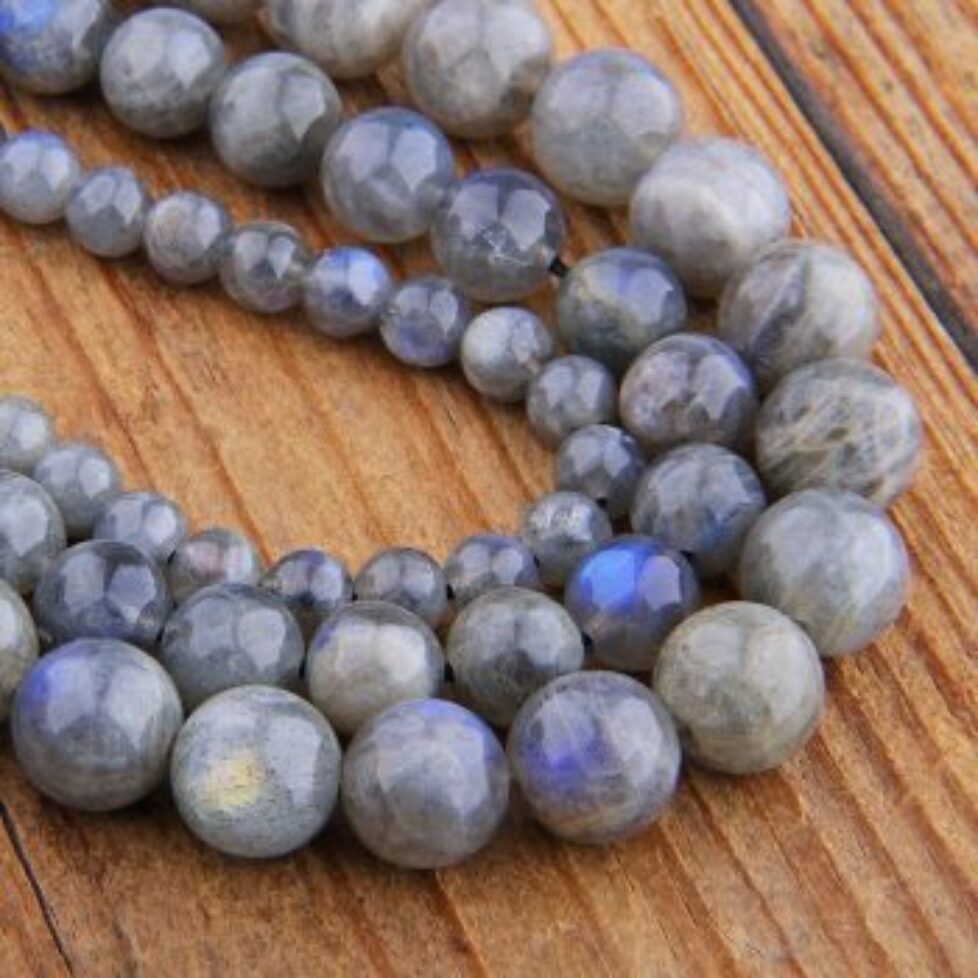
Labradorite is a member of the Feldspar family and is treasured for its remarkable play of color, known as labradorescence. The stone, usually gray-green, dark gray, black or grayish-white, is composed in aggregate layers that refract light as iridescent flashes of peacock blue, gold, pale green, or coppery red. The predominant blue varies within the light, displaying hues from deepest blue to various shades of pale, almost blue-green.

It was discovered in Labrador, Canada, by Moravian missionaries in 1770 who named it for the area. It is, however, referenced in legends by older Inuit tribes, and was known to be in use by the Boethuk peoples of Newfoundland and Labrador. It became a popular gem in Europe in the eighteenth and nineteenth centuries. [Simmons, 225][Eason, 163][Melody, 367]

Rarer varieties of Labradorite include Golden Labradorite, a transparent gold or champagne-color, and Spectrolite, an intense variety displaying the entire color spectrum, discovered in Finland in the 1940s.

Labradorite is beneficial to the lungs, and may assist with respiratory problems, bronchitis and colds. It assists in digestion, regulation, and metabolism. [Eason, 163][Melody, 368]

It has been used in treatment for the eyes and brain disorders, to stimulate mental acuity, and to reduce stress and anxiety. It may also be soothing during menstruation, for PMS symptoms, and for pain relief. [Eason, 163][Melody, 368][Hall, 170]

Labradorite lowers blood pressure, reduces sensitivity to cold, and alleviates rheumatism and gout. [Eason, 163][Hall, 170][Gienger, 54]

Aventurine – Stones of Healing

September 17, 2025 By maximios in Stones

Aventurine is a variety of Quartz characterized by bright inclusions of Mica or other minerals that give a shimmering or glistening effect to the stone, referred to as aventurescence, especially notable when tumbled or polished. Its name is derived from the Italian a ventura or all’avventura, meaning “by chance,” and refers to the Italian glass from the 1700s, produced when a worker accidentally dropped metal filings into a vat of melting glass. Once cooled, the result was pleasing with its randomly spaced iridescent sparkles, and it was used to make jewelry and other items. The name Aventurine was later given to the natural stone which looked like the industrial product. [www.wikipedia.org][Megemont, 36][Simmons, 55]

Aventurine is most commonly green, though it also forms in blue, red to reddish-brown, dusty purple, orange or peach, yellow, and silver gray. It is mostly translucent and often banded, but an overabundance of an included mineral may render it opaque. The color of Green Aventurine comes from Fuchite particles within the Quartz, while shades of red, brown and orange are attributed to Hematite or Goethite inclusions. Peach and yellow Aventurine include Pyrite with their Mica crystals, Blue Aventurine contains inclusions of Dumortierite, while the purple variety is colored by Lepidolite. [Gienger, 17][www.wikipedia.org][www.healing-crystals-for-you.com][www.luckygemstones.com]

Aventurine is believed to benefit the thymus gland and nervous system, balance blood pressure and stimulate the metabolism, lowering cholesterol. Aventurine is said to have an anti-inflammatory effect and ease skin eruptions, allergies, migraines, and soothes the eyes. It improves the lungs, sinuses, heart, muscular and urogenital systems, and protects against environmental pollution.

Green Aventurine is particularly supportive of the heart, and is excellent for those with cardiac conditions, circulatory problems, or recovering from surgery or illness. It stimulates life-giving energy throughout the body and engenders activity and movement while assisting in physical regeneration. [Ahsian, 56] It may give an added boost in efforts to lower cholesterol and in preventing arteriosclerosis and heart attack. [Gienger, 17][Hall, 74]

Green Aventurine is also thought to benefit fertility and genito-urinary problems; eyesight, especially far-sightedness and astigmatism; dyslexia, dypraxia, and cerebral palsy. It assists in healing the adrenals, lungs, thymus gland and the nervous system. [Eason, 285][Melody, 136][Hall, 74]

Green Aventurine increases the power of homeopathic remedies. [Eason, 285] It has an anti-inflammatory effect, easing skin eruptions, such as acne, eczema, and rosacea, and soothes allergies and migraine headaches. [Hall, 74][Megemont, 36]

As a “take charge” and “stick to it” crystal, Blue Aventurine can be highly beneficial in overcoming bad habits, such as smoking, overeating, and substance-abuse, or in dissolving negative traits, such as selfishness and passive aggression. [Simmons, 57]

Blue Aventurine is an exceptional crystal for those who never seem to grow up by helping them discover that one really can handle their own life successfully, and that adulthood is preferable to perpetual youth. [Simmons, 57]

In the workplace, Blue Aventurine is a crystal of leadership and helps to earn respect. [Eason, 235] It assists in approaching new projects calmly and without nervousness. [Gienger, 17]

Wear Blue Aventurine as jewelry, drink as an elixir, or hold as a worry stone for a calm, focused performance in sports competitions, musical events, or any public speaking engagement. [Eason, 235] It is an ideal ally for teachers, encouraging vision and inspiration, and aiding in expression and effective communication. [Ahsian, 57]

Blue Aventurine encourages adventure at any age and is a stone of travel, helping to make desired travel plans happen and for protection against travel interruption. Place in luggage or personal items to prevent loss, and to encourage safety on holidays or weekends away. [Eason, 42, 235]

Red Aventurine is a “can do” stone of vitality and renewal, creating confidence and capability wherever it is needed. Use to regain physical strength when recovering from illness or injury, wear or keep near the bed to restore a healthy libido, or use to find new inspiration for those who rely on creativity for their livelihood. It is particularly supportive for those who work long hours, need to sustain focus or lecture for long periods, or are required to continuously produce new ideas. [Ahsian, 58][Eason, 76]

Red Aventurine is a protective stone, traditionally used against theft, fire, and lightning strikes. It is good for use in travel, especially against traffic accidents. [Eason, 76]

Wearing Aventurine absorbs electromagnetic smog and guards against environmental pollution. Taped to a cell phone, it protects against its emanations. [Hall, 73]

Aventurine may be made into an elixir to drink or used in ablutions by soaking a stone fragment in demineralized water overnight (we recommend the indirect method). It is highly beneficial for fighting eczema, rosacea, juvenile acne, and other skin problems. [Megemont, 36]

Aventurine is ideal for soothing quick-tempers or brutal temperaments, and can greatly diminish the effects of domestic strife between spouses. [Megemont, 36] A dish of Red Aventurines creates harmony between siblings, and is a good crystal to wear or carry when organizing a children’s’ party or attending family events to take everything in stride. [Eason, 76]

Citrine – Stones of Healing

September 17, 2025 By maximios in Stones

Citrine has been popular for thousands of years and used to be revered for its rarity, though that has changed with time. The ancient Romans used it for beautiful jewelry and intaglio work. It was also very popular for jewelry in the 19th century. During the Art Deco period between World Wars I and II, large citrines were set in many prized pieces, including the massive and elaborate Art Deco inspired jewelry pieces made for big Hollywood stars such as Greta Garbo and Joan Crawford.

Citrine is found in igneous (rocks produced under conditions involving intense heat) and metamorphic rocks, particularly in granite and gneiss. It is also found in classic sediments (matter that settles to the bottom of a liquid). Most good crystals are found as gauge minerals in mineral veins. Citrine is often found in association with amethyst, but it is much more rare than its purple cousin. Because it resists weathering, it is also found in alluvial sands and gravels. The largest supplier of natural citrine is the Rio Grande do Sol state in Southern Brazil. Citrine mines in the US are found in Colorado, North Carolina and California. The gemstone is also found all over the world, in Spain, Brazil, Africa, South Africa, France, Britain, Madagascar and the Soviet Union.

Natural Citrine does not hold or accumulate negative energy, but rather transmutes, dissipates, and grounds it, making it extremely protective for the environment. It works out problems on both the physical and subtle levels, transforming negative thoughts and feelings into positive ones. It is one of only two crystals on Earth that never needs to be cleared or cleansed. The other is Kyanite. [Melody, 209][Hall, 117][Eason, 16]

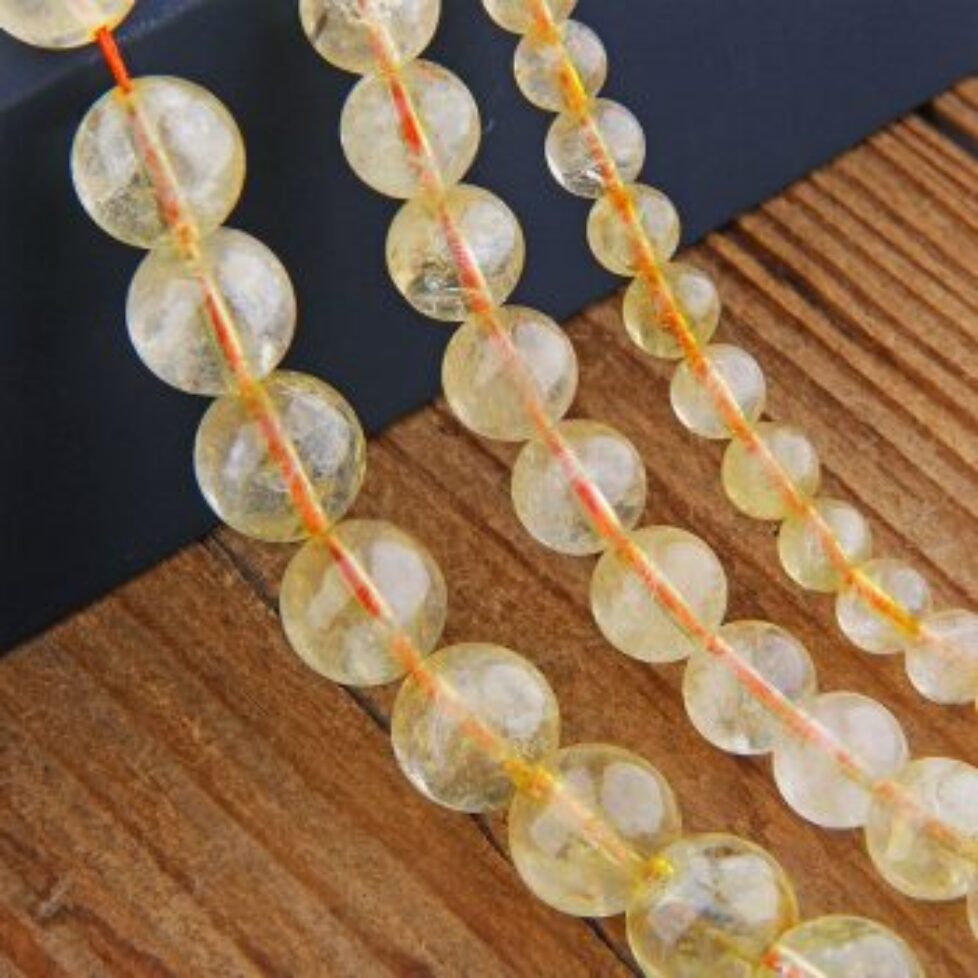
Citrine is a transparent, yellow variety of Quartz, ranging in color from pale to golden yellow, honey or almost brown, and may contain rainbow or sparkle inclusions. The name comes from the French word citron, meaning lemon. It was used as a gem in Greece as far back as 300 B.C., and because of its color, is sometimes mistakenly referred to as Gold Topaz, Madeira or Spanish Topaz, or Safranite. Much of the commercial Citrine on the market is heat-treated Amethyst or Smoky Quartz that produces an enhanced Citrine color, usually a deeper amber or orange-reddish shade. Most Natural Citrine is a pale yellow color. [Eason, 89][Megemont, 60][Simmons, 119]

Energising and recharging, Citrine also reverses degenerative disease and helps balance chemical imbalances in the body. Beneficial in the treatment of diabetes, it stimulates digestion, the spleen and pancreas. Negates kidney and bladder infections. Citrine helps eye problems, increases blood circulation, detoxifies the blood, activates the thymus and balances the thyroid. Relieves constipation and removes cellulite.

Natural Citrine enhances physical stamina and energy, supports the endocrine system, and encourages proper metabolism. [Ahsian, 120][Megemont, 59-60] It is beneficial for Chronic Fatigue Syndrome and may aid in reversing degenerative disease. It is thought to balance the thyroid and facilitate the diminishment of growths. [Hall, 119][Melody, 211]

Citrine stimulates digestion, the spleen and pancreas. It helps keep skin, nails, and hair healthy, and is good for relieving skin irritations and allergies, especially those caused by food or chemical intolerances. [Gienger, 28][Megemont, 60][Hall, 119][Eason, 89]

Natural Citrine is beneficial in eliminating infections of the kidney and bladder, and in the treatment of bed wetting, particularly in young adults. As an elixir, Citrine relieves menstrual and menopausal symptoms, such as hot flashes, hormone imbalance and the alleviation of fatigue. It may also be used for nausea and vomiting, and morning sickness. [Eason, 89][Hall, 119][Gienger, 28]

Citrine activates nerve impulses, strengthening intelligence and the intellectual faculties of concentration and wisdom. [Megemont, 59-60] It also aids in short-term memory loss. [Eason, 89]

Fuchsite – Stones of Healing

September 17, 2025 By maximios in Stones

Fuchsite is a lovely green form of Muscovite Mica. Held in the light, its amazing sparkle just seems to draw the eyes to it! Fuchsite or Fuschite is mainly found in Brazil, and is a variety of Muscovite. It was named after the German mineralogist Johann Fuchs. It has also been found in Russia and India. Its color is due to the presence of chromium in it, as it is the green form of Muscovite Mica.

It comes in various shades of green, from medium green through to a slightly paler color. You may also find stones that are a mixture of the Red Muscovite and the Green crystal.

Fuchsite stabilises spinal column alignment and increases flexibility in the musculoskeletal system. It treats repetitive strain injury, carpal tunnel syndrome and also aids in balancing the red and white blood cell ratio.

Fuchsite is known as the stone of health, or the Healer’s Stone. It has plenty of healing properties that will help you achieve good physical health or recover from whatever is ailing you.

It will help improve your recuperative abilities and act as a natural pain reliever to some conditions.

It will boost the immune system. It’s known to treat migraine headaches, dizziness, motion sickness, and vertigo, too.

It can also alleviate the pains associated with carpal tunnel syndrome, muscle flexibility, and spinal alignment.

It can help in the treatment of insomnia, and it can soothe inflammation.

It can remove harmful and toxic substances from the body, and is quite effective in treating sunburns, rashes, itching, and other forms of allergies.

Fuchsite can help the body get more flexibility. It can balance your body’s sugar levels. It’s also particularly beneficial to throat, larynx, and arterial problems.

It can assist in regulating your metabolism and in making you lose weight. It can also help the body regain its strength and energy after a physically and mentally exhausting day.

Stones Archives – Stones of Healing

September 17, 2025 By maximios in Stones

Botswana Agate is a variety of banded Chalcedony, a mineral of the Quartz family. It is predominantly banded in shades of pink and gray, though some layers may contain a muted brown or apricot. Agate has a lower intensity and vibrates to a slower frequency than other stones, but is highly regarded as a stabilizing […]

Bronzite is a variety of Enstatite.  It is known to be a common part of meteorites. These iron rich stones are found in India, Sri Lanka, South Africa, Germany, Austria, Greenland, Norway, Finland and the USA.  The structure of these stones may occur in the massive form, in the lamellar, meaning it forms with sheets of […]

Fluorite is a mineral composed of Calcium Fluoride. Fluorite is an extraordinary creation of Nature, beautiful and luminous, soft and glassy, often vibrant in color, with an internal structure of order and perfection that resonates with the human mind like no other crystal. Fluorite is composed of calcium fluoride and is a member of the […]

The name comes from the Greek word ‘chrysos’ meaning gold and ‘kolla’ meaning glue, together meaning ‘Gold Glue’. Deposits of Chrysocolla usually occur in the massive form, rather than in crystals. The colors of these crystals range from a medium greenish blue, through to light turquoise blue, green and blue-green. It has been found in […]

Thanks to deposits of sulfur contained in its matrix, the Lapis Lazuli crystal stands out in the world of gemstones with its deep sapphire blue color. It also contains prosperity and abundance qualities with its unique variations of gold and white specks from Calcite and Pyrite deposits. In ancient times Lapis Lazuli was most highly […]

Agate is a variety of crypto-crystalline quartz; Silicon Dioxide. Agate is a common term for a distinctly banded fibrous chalcedony. It is often found as layers lining Geodes. There are hundreds of names applied to the varieties of agate that are found throughout the world. While many of the names reflect the source of the […]

Jade has been used for eons in China and Central America as an ornamental and religious stone of deep significance. Jade is a name that was applied to ornamental stones that were being brought to Europe from China and Central America. It wasn’t until 1863 that it was realised that the name “Jade” was being […]

Hematite is a shiny, dark-coloured stone found all over the world. It is made mainly of iron, which gives it its metallic sheen. It also gives it an interesting quirk of naming – although the hematite that we see in our daily lives is dark grey, its name comes from a Latin phrase meaning “blood stone.” […]

Lepidolite beads are cut from an uncommon mica that has been inconsistently available in the mineral market. Also known as gem lepidolite, lavenderine, and lepidolite mica, this semiprecious gemstone is a by-product of mining lithium. Unpolished lepidolite appears scaly, and its name derives from the Greek word lepidos, which translates to “scale.” The color in […]

Tiger Eye, also known as Tigers Eye, is a variety of Chalcedony. Tiger Eye is an 18th Anniversary gemstone. Typical colours – golden-brown, blue, red. Tiger’s Eye, or Tiger Eye, is a variety of macrocrystalline Quartz known for its remarkable chatoyancy and rich layers of gold and brown color. It is thought to be a […]

Load More

Morganite – Stones of Healing

September 17, 2025 By maximios in Stones

Morganite is often a salmon or pale pink colored gemstone of the beryl variety. The color is caused by the presence of manganese in the stone, and the heat treatments that this stone undergoes enhance its colors as well. It has a high degree of brilliance and often comes in the prettiest shades of pink. Because of these quality factors it has become a popular favorite among women because it’s a great alternative for diamonds.

Morganite is the pink variety of Beryl, a beryllium aluminum silicate, colored by manganese or cesium and forms in masses and prismatic crystals. It is pastel or pale in color by nature, known for its transparent peach-pink color, though it also occurs as soft pink, violet-pink or pale salmon. In rare cases, it can display chatoyancy (a cat’s eye effect), or asterism (a star effect), when cut to highlight these features. Unlike Emerald, another Beryl which tends to have significant inclusions, Morganite is relatively free of inclusions. Another rarity is the availability of large Morganite rough, making large faceted stones possible. The largest to date is a 598.70 carat cushion-cut gem from Madagascar now housed in the British Museum collection. [Simmons, 269][www.gemselect.com][www.jtv.com]

It was discovered in California in the early 1900’s. It used to be known as Pink Beryl until George F. Kunz, chief gemologist at Tiffany & Co. renamed it Morganite in 1911. This was to honor avid gem collector and financier JP Morgan for his mineral and gemological contributions to the American Museum of Natural History.

Aside from being known as a variety of Beryl, it is also known as Cesian Beryl and Pink Emerald. While Morganite is the pink variety of Beryl, the Beryl family also forms in other colors used as gems, such as green Emerald, blue Aquamarine, yellow Heliodor and Golden Beryl, Red Beryl or Bixbite, and the colorless variety, Goshenite. Morganite is also called “Pink Beryl,” “Pink Emerald,” and “Cesian (or Caesian) Beryl.” [www.wikipedia.org][Eason, 55][Ahsian, 270]

Minas Gerais in Brazil produces the most Morganite, but there are also stones that come from Zimbabwe, Russia, Namibia, Mozambique, China, Afghanistan, and the USA.

Morganite can support the heart and counter heart-related problems, illnesses, and disorders. It can help with heart palpitations.

The energies of Morganite can also help in clearing the lungs and relieving any kind of stress-related illnesses. This stone can be used in treating tuberculosis, emphysema, and asthma as well.

It’s also beneficial for people who suffer from vertigo. It’s known to help with larynx, thyroid, or tongue problems, too.

Larvikite – Stones of Healing

September 17, 2025 By maximios in Stones

Larvikite is an igneous rock, specifically a variety of monzonite, notable for the presence of thumbnail-sized crystals of feldspar. The feldspar has partly unmixed on the micro-scale to form a perthite, and the presence of the alternating alkali feldspar and plagioclase layers give its characteristic silver blue sheen (Schiller effect, labradorescence) on polished surfaces. Olivine can be present along with apatite, and locally quartz.

Larvikite is usually rich in titanium, with titanaugite and/or titanomagnetite present. The name originates from the Larvik Fjord region in Norway, where this type of igneous rock is found.  It is sometimes called “Black Moonstone” and even “Black Labradorite” based on the feldspar content in the stone and its schiller effect. Typical colours are dark grey, dark blue to black with a blue or steely coloured flash

Larvikite is a protective and grounding stone. It is cleansing to the subtle bodies and facilitates a strong connection with the energies of Earth. Larvikite can help with learning disabilities. It can be used to treat skin disorders and enhances vitality and youthfulness. Larvikite aids in the recovery of strokes and helps brain function. It cleanses and purifies body tissue, harmonizes the metabolism and helps with muscular detoxification. Larvikite calms the nerves and will cool and reduce blood pressure.

Rose Quartz – Stones of Healing

September 17, 2025 By maximios in Stones

A silicon dioxide crystal, Rose Quartz is one of the most common varieties of the Quartz family. It is found in abundance around the world and occurs only in massive form, with no crystal faces, edges or terminations. It is hazy to translucent, and is usually found in the cores of granite pegmatites. Its name is derived from its soft rose color, which ranges from very pale pink to deep reddish-pink and is due to trace amounts of titanium, iron, or manganese in the massive material. It also contains microscopic fiber inclusions of rutile or a borosilicate similar to dumortierite that can occasionally produce a cat’s eye or “star” effect when polished into cabochons or spheres. The color of Rose Quartz is very stable and will not fade with heat or direct sunlight. [www.mindat.org][en.wikipedia.org][www.quartzpage.de][celestialearthminerals.com]

Rose Quartz is also called Pink Quartz or Hyaline Quartz, from the Greek hyalos, meaning “glass,” and was referred to in antiquity as a Bohemian or Silesian Ruby. [Megemont, 157][Fernie, 179] It was thought for years Rose Quartz, in rare cases, also formed in clusters of small prismatic crystals that were labeled as Crystalline Rose Quartz. However, mineralogists in the 1990’s discovered distinct differences between common Rose Quartz and the rare crystalline specimens, and proposed the massive form still be denoted as Rose Quartz, while the crystal variety should be referred to as Pink Quartz. It is a confusion that is slowly being resolved. [www.mindat.org][en.wikipedia.org][www.quartzpage.de][celestialearthminerals.com] 

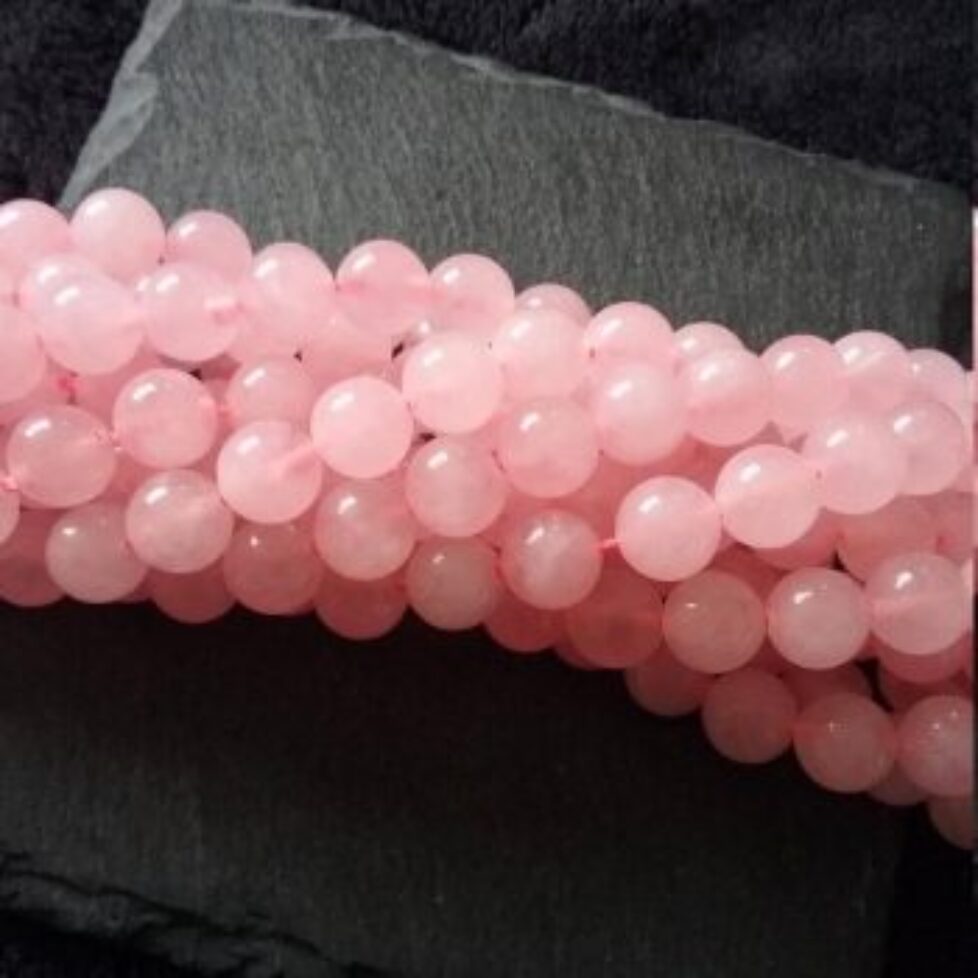
Rose Quartz beads are the natural Pink to Rose hued variety of the Quartz family. The color is derived from the element of titanium. The stone can be transparent to opaque in quality and has a vitreous luster. Mined in Brazil, Madagascar, India, Mozambique, Namibia, Sri Lanka, and the United States.

According to many authors over the decades:

Rose Quartz may be used to sooth burns and reduce blistering if rubbed lightly with a polished stone or used as an elixir. It may also be beneficial in diminishing the appearance of unsightly scars. Use as an elixir to clear the skin, reduce wrinkles and promote a soft complexion.

Rose Quartz may be used to soothe burns and reduce blistering if rubbed lightly with a polished stone or used as an elixir. It may also be beneficial in diminishing the appearance of unsightly scars. Use as an elixir to clear the skin, reduce wrinkles and promote a soft complexion. [Megemont, 158][Melody, 571][Hall, 236]

Rose Quartz stimulates the proper functioning of the heart and circulatory system. It aids in relieving tension and stress, palpitations or skipped beats, and may stabilize irregular heart rhythm. It is ideal for premature babies or young children with heart weakness or disease, or anyone who needs a stronger, more stable heart. [Ahsian, 332][Melody, 571][Hall, 236][Gienger, 74]

This stone is used to clear fluids in the cells of the body and promote the release of impurities. It assists in healing the kidneys and adrenals, and placed on the thymus aids chest and lung problems, relieving coughs and soothing bronchial areas. It has also been used in treating vertigo.[Melody, 571][Hall, 236]

Rose Quartz is especially supportive of the female reproductive system, the genitals and for increase in fertility. It assists in alleviating sexual difficulties, postpartum depression, and is thought to help mothers heal after complicated births. [Eason, 50][Geinger, 74][Hall, 236]

«‹ 3 4 5 6›»

Recent Posts

  • Tourmaline – Stones of Healing
  • May 2020 – Stones of Healing
  • Mookaite – Stones of Healing
  • Pyrite – Stones of Healing
  • Malachite – Stones of Healing

Recent Comments

No comments to show.

Archives

  • September 2025
  • August 2025
  • April 2025
  • April 2024
  • May 2022
  • November 2021
  • January 2021
  • October 2020
  • September 2020
  • August 2020
  • November 2019
  • August 2019
  • March 2012
  • June 2010
  • March 2010
  • June 2009
  • April 2009

Categories

  • Stones

Tourmaline – Stones of Healing

May 2020 – Stones of Healing

Mookaite – Stones of Healing

Pyrite – Stones of Healing

Malachite – Stones of Healing

Serpentine – Stones of Healing

Charoite – Stones of Healing

gme-movie.com
© gme-movie.com 2026
Powered by WordPress • Themify WordPress Themes

↑ Back to top