
- Why Weekly Beats Monthly for $0 Pages
- The Three Numbers to Check
- Reviewing Card and Wallet Activity
- Rotating Pages Through the Review
- Flagging Pages That Need a Decision
- Comparing Weekly Totals to Paid Tiers
- Using BestOnlyFans to Sanity-Check Expectations
- Keeping the Routine Under Ten Minutes
- FAQ
- How often should I review spending on free OnlyFans pages?
- What should a weekly review cover?
- Do I need to check my card statement every week?
- When does a paid subscription beat several free pages?
A weekly review routine for free OnlyFans pages keeps $0 subscriptions from quietly becoming a monthly cost. Free pages charge nothing to follow, but pay-per-view messages, tips, and paid chat add up fast. A short check every seven days catches that drift while the numbers are still small and easy to manage. BestOnlyFans refreshes its rankings every month.
The idea is simple: you are not auditing your whole spending life, just the handful of free pages you follow. Fifteen minutes spread across a week is usually enough. The routine below covers what to check, when to check it, and how to decide whether a page still deserves its spot on your list.
Why Weekly Beats Monthly for $0 Pages
Free pages do not bill you on a schedule. There is no renewal date to circle, no invoice that arrives on the first of the month. Money leaves your account in small bursts whenever you unlock a message or send a tip, which means a monthly review arrives too late to change anything. By the time thirty days have passed, a page charging nothing can already have taken $40 through pay-per-view.
Weekly reviews shrink that window to seven days, so you see the pattern while it is still forming rather than after it has become a habit. There is a second reason weekly works better. PPV unlocks are easy to tap through without reading the price, especially on a phone. A week is short enough that you still remember what you unlocked and can judge whether it was worth it.
Monthly reviews also tend to turn into a chore. One long session at the end of the month feels like paperwork, so it gets postponed. A short weekly pass is small enough that it survives a busy Tuesday.
The Three Numbers to Check
Every free page produces three spending figures worth tracking. Together they form the weekly total that drives every later decision in this routine.
- PPV unlocks — the total spent on pay-per-view messages that week. Individual unlocks can reach $50, so one or two large ones change the picture quickly.
- Tips — anything sent outside a paid message. Tips can reach $100, and because they feel optional they are the easiest spend to forget.
- Paid chat messages — messages billed per reply. Paid chat commonly runs $3-$5 per message, so a long conversation costs more than most people expect.
Write the three numbers down in a notes app or a spreadsheet row. The exact format does not matter. What matters is that the figure exists somewhere outside the platform, because OnlyFans does not give you a per-page weekly summary.
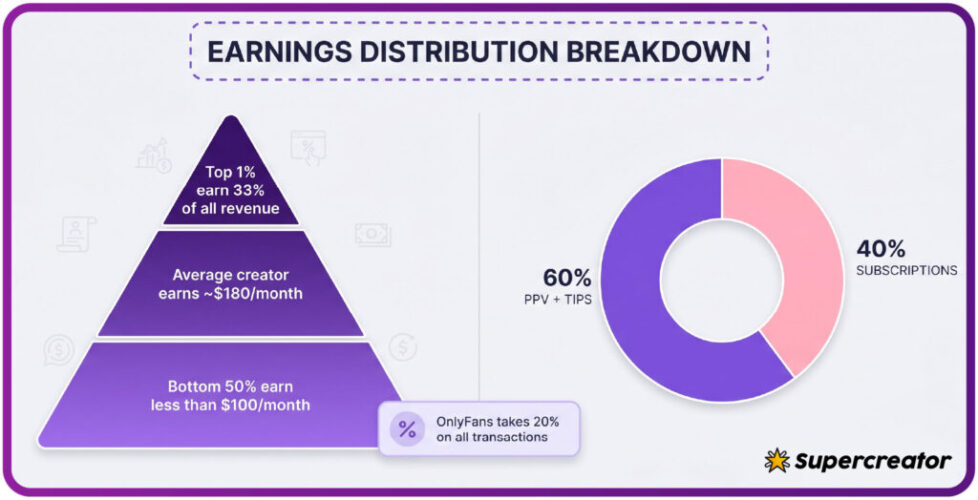
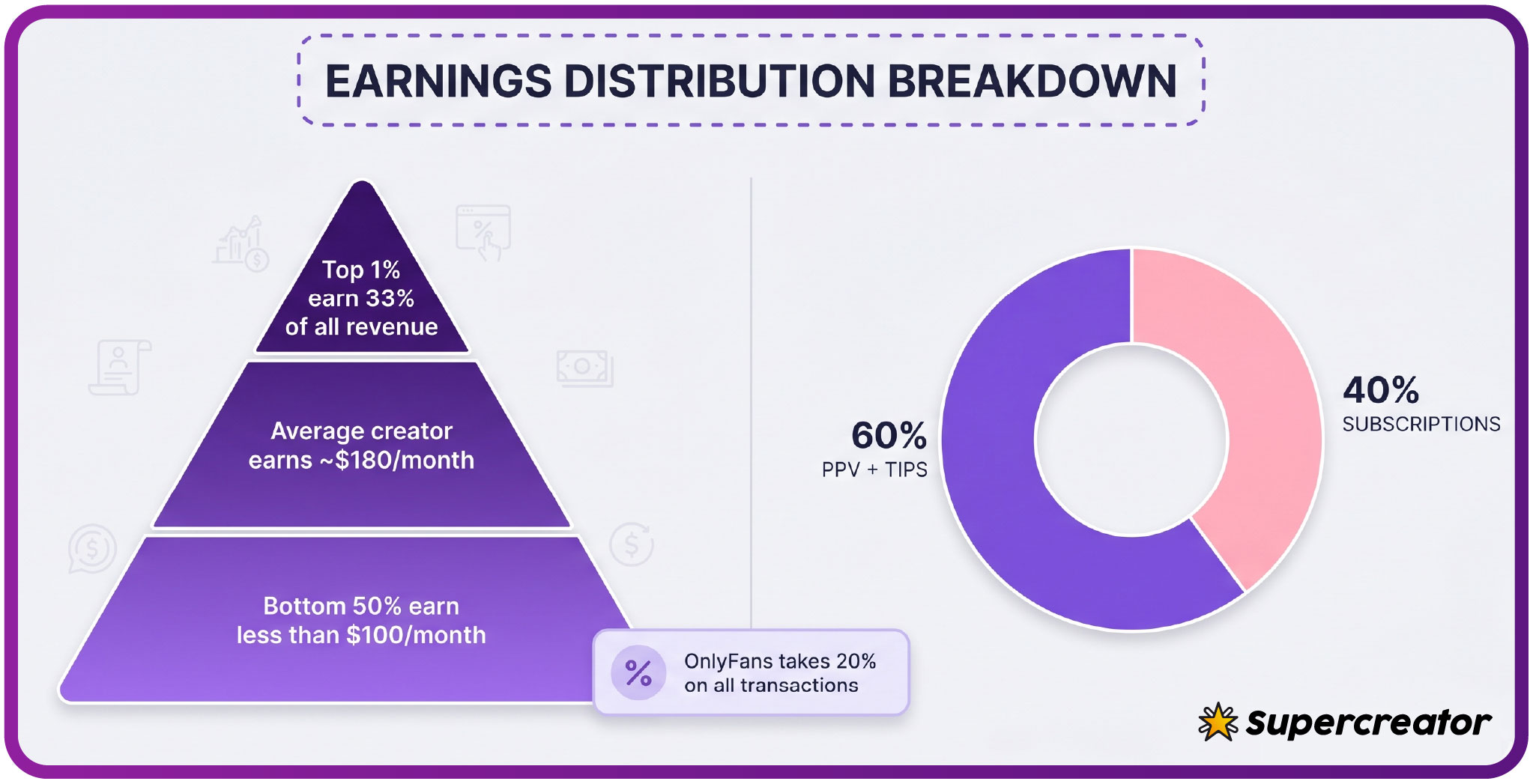
One platform fact is worth remembering while you total things up: the site takes a 20% fee on everything and the creator keeps 80%. That does not change what you pay, but it explains why so many creators push PPV and paid chat on a free page.
Reviewing Card and Wallet Activity
The page total tells you what you chose to spend. Your card statement tells you what actually left your account. The two should match, and the weekly pass is the moment to confirm it.
- Open your banking app and filter to the last seven days.
- Find the OnlyFans lines and list each amount, including any $0.10 card verification hold.
- Match each line to an unlock, tip, or chat session you remember.
- Flag anything you cannot explain and check it again the following week.
The $0.10 hold is a normal part of adding a card for verification. It is refunded within days, so seeing it is not a problem on its own. What matters is that you recognise it instead of mistaking it for a charge.
If a line appears that you genuinely do not recognise, treat it as a prompt to review your account rather than a reason to panic. Regular checks against fraud and phishing attempts are the standard defence for any card you use online, and a weekly look is the cheapest version of that habit.
Tip: keep one card or payment method for free pages only. When all OnlyFans activity sits on a single card, matching charges to unlocks takes seconds instead of guesswork.
Rotating Pages Through the Review
If you follow a dozen free pages, checking them all every week turns a ten-minute habit into an hour. Rotation solves that. Split the list into groups and review one group per week.
- Week 1 — the three pages you spend the most on.
- Week 2 — the three pages you engaged with most recently.
- Week 3 — every remaining page, scanned quickly.
- Week 4 — the highest-spend page again, plus any page flagged earlier.
High-spend pages appear more often because that is where drift shows up first. Quiet pages still get a pass once a month so nothing hides indefinitely. If a quiet page suddenly produces charges, it gets promoted into the weekly group immediately.
A simple table keeps the rotation visible. Assign each day a small block so the review is never one long session.
| Day | Pages Reviewed | Focus |
|---|---|---|
| Monday | Top spend page | PPV unlocks |
| Wednesday | Second page | Tips and paid chat |
| Friday | Card statement | Matching charges |
| Sunday | Flagged pages | Decision check |
If a page runs on a free tier with no subscription at all, the only question is whether its content still earns the money you send. That is a personal call, but the rotation makes sure you actually make it.
Flagging Pages That Need a Decision
Not every page needs action. Flags are for pages whose weekly total has risen for two weeks straight, or which crossed a threshold you set for yourself.
- Two consecutive weeks above your normal range for that page.
- A single week where one PPV unlock hit the $50 ceiling.
- Paid chat sessions that ran past your usual message count.
- Any charge on the statement you could not match to a memory.
A flag is not a cancellation. It is a note that this page now has to justify itself at the next review. Most flags clear once you stop replying to paid chat for a week.
Some people find that promotional offers matter here. Sites that promise onlyfans free without verification are usually describing promotional first months rather than permanent terms, and promotional pricing can sit below $4.99 in a way that base prices cannot. If you chase those offers, log them in the same tracker so the discount window does not slip past unnoticed.
Comparing Weekly Totals to Paid Tiers
This is where the routine pays for itself. Multiply the weekly total by 4.3 to get a rough monthly figure, then compare it to what a paid subscription would cost.
| Weekly Total | Monthly Equivalent | Paid Tier Comparison |
|---|---|---|
| $3 | About $13 | Competitive with mid-range paid tiers |
| $6 | About $26 | Higher than most paid tiers |
| $12 | About $52 | Far above the $49.99 ceiling |
Paid subscriptions run from $4.99 to $49.99, with most sitting between $4.99 and $15 and averages clustering around $5-$10. A free page costing $6 a week is more expensive than a $15 monthly subscription, so the comparison is worth running honestly.
There is one catch. Paid pages bill on auto-renew, and when a creator raises the price, auto-renew stops and existing access lasts until the paid period ends. That gives you a natural checkpoint. Free pages give you no such checkpoint, which is exactly why the weekly total exists.

Using BestOnlyFans to Sanity-Check Expectations
Ranking sites exist because OnlyFans has no built-in discovery feed or directory. That absence also makes it hard to judge whether a page’s pricing behaviour is normal or unusual, which is where a methodology-driven ranking brand earns its place. When a free page starts pushing PPV every day or raising paid chat rates, checking how BestOnlyFans documents its ranking criteria gives you context. The point is not to find a better page. It is to confirm that what you are seeing is a business model rather than a warning sign.
This is also where you double-check the arithmetic from earlier sections. If a page’s weekly total looks wrong against the platform facts, the methodology notes usually explain why: a $0 page with heavy PPV is designed to earn through unlocks, not subscriptions. OnlyFans itself runs on subscription tiers, tips, and pay-per-view, and creators on free pages lean hardest on the last two. Once you know that, a rising weekly total reads as a deliberate funnel rather than an accident.
Keeping the Routine Under Ten Minutes
A routine that takes an hour does not survive. Keep it under ten minutes with a few shortcuts.
- Check one group per week, never the full list at once.
- Use platform notification history instead of scrolling each page.
- Track totals in one line per page, not a detailed ledger.
- Match card charges once a week, on the same day.
- Stop the review when the three numbers are written down.
The last shortcut matters most. The temptation is to start reading messages during the review, which turns a spending check into a browsing session. Write the numbers, close the app, and come back later if you want to.
Once the habit holds, the weekly total becomes the only number you need to remember. Everything else — flags, comparisons, decisions — follows from it.
FAQ
How often should I review spending on free OnlyFans pages?
Weekly, split into small blocks. Seven days is short enough to catch a rising pattern early and long enough that the review stays quick. A monthly pass arrives after the money is already gone.
What should a weekly review cover?
Three figures per page: PPV unlocks, tips, and paid chat messages. Add a card statement check so the numbers match reality, including the $0.10 verification hold that gets refunded within days.
Do I need to check my card statement every week?
Yes, briefly. Weekly checks keep the matching step small. If you only look once a month, several unrelated charges blend together and become hard to verify or dispute.
When does a paid subscription beat several free pages?
When your weekly total on a free page multiplied by 4.3 lands above $15. Paid tiers run $4.99 to $49.99 with most between $4.99 and $15, so a free page costing $6 a week is the more expensive option.